
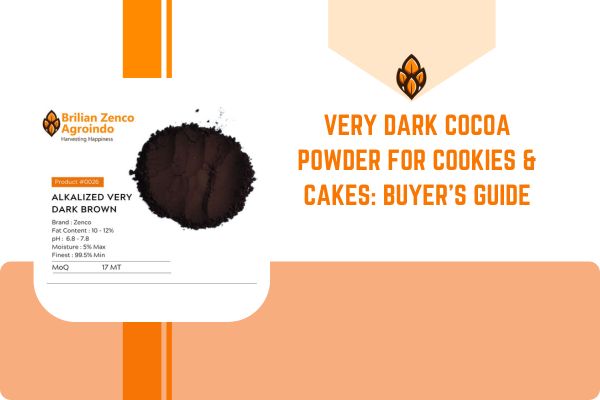
Very dark cocoa powder can transform baked goods. It deepens color, delivers a richer “chocolate look,” and helps brands create premium visual appeal in cookies and cakes. But for buyers, “very dark” is not a single standard. Two products can both be labeled very dark yet behave differently in baking—changing bitterness, aroma, color development, and even texture.
This guide explains how to evaluate very dark cocoa powder specifically for cookies and cakes, what specifications to request, and how to test suppliers so you get consistent results at scale.
1) What “Very Dark Cocoa Powder” Usually Means
In most cases, very dark cocoa powder is alkalized (Dutch-processed) to achieve a deeper color. The alkalization process typically increases pH and reduces acidity, which can soften sharp notes and shift the color from reddish-brown to darker brown. However, the intensity of alkalization varies by supplier and process, leading to different outcomes in your finished product.
Buyer takeaway: Always evaluate very dark cocoa by measurable specs (pH, color, fat %, moisture), not by the name alone.
2) Why Bakers Use Very Dark Cocoa in Cookies & Cakes
For bakery applications, very dark cocoa powder is commonly chosen for:
- Deeper baked color (especially important for premium-looking cookies, brownies, chocolate cakes, and sandwich biscuits)
- More uniform appearance across production runs
- Strong visual “chocolate signal” even at moderate usage rates
- A flavor profile that can be tuned (from smooth and mild to intense) depending on the cocoa and process
In cakes, it can help deliver the “dark chocolate cake” look without using high levels of cocoa that might add dryness or bitterness. In cookies, it can provide a bold color while keeping the dough workable.
3) Key Specifications to Request From Suppliers
To compare offers properly, request a Product Specification Sheet and COA (Certificate of Analysis). For cookies and cakes, focus on:
pH (critical for baking behavior)
Very dark alkalized cocoa typically has a higher pH than natural cocoa. pH affects taste, color development, and how cocoa interacts with leavening.
- If your recipe uses baking soda, pH and acidity balance matter.
- If you’re adjusting recipes from natural to alkalized cocoa, leavening may need changes.
Color specification
Ask for a defined color target. Some suppliers can provide:
- Visual standard references, or
- Instrument readings (e.g., Lab* values)
Fat content (%)
Fat level influences flavor perception and mouthfeel, but also cost and processing. Make sure you compare quotes using the same fat range.
Moisture (%)
Moisture impacts shelf stability and flowability. High moisture can increase clumping and reduce handling efficiency.
Fineness / particle size
Finer cocoa generally disperses better and can reduce gritty mouthfeel in cakes or cookie creams.
Microbiology and safety parameters
Even for bakery, buyers commonly require microbiology limits and confirmation of absence for key pathogens (depending on your QA system and destination regulations).
Buyer takeaway: For bakery, the most decision-driving specs are usually pH + color + fat %, then moisture and fineness.
4) Flavor Balance: Dark Color Without Excess Bitterness
A common buyer concern is that “very dark” equals “more bitter.” That’s not always true—but it can happen if the cocoa profile is intense or if usage levels are high.
To keep flavor balanced:
- Ask for a sample and run a side-by-side bake test
- Evaluate bitterness, astringency, and aftertaste after baking (not just raw cocoa taste)
- Consider blending very dark cocoa with a milder cocoa to achieve color targets while keeping a smoother profile
Buyer takeaway: The best very dark cocoa for cookies and cakes often delivers dark color efficiency (strong color at lower dosage) while keeping bitterness manageable.
5) Performance Testing: A Simple Buyer Protocol
To evaluate cocoa powders consistently across suppliers, test with a structured method.
Cookie test (pilot batch)
- Keep the recipe identical for all samples
- Measure: dough handling, baked color, flavor intensity, bitterness, spread, and dryness
- Compare color under the same lighting
Cake test (pilot batch)
- Run a standard chocolate sponge or cake base
- Measure: crumb color, aroma, taste, lift, and perceived dryness
- Confirm whether leavening needs adjustment (especially if switching from natural cocoa)
Scorecard (recommended)
Score each sample 1–5 for:
- Color after baking
- Flavor balance
- Consistency between repeats
- Handling (mixing, dusting, clumping)
Buyer takeaway: A cocoa powder that looks great in a small test but varies in repeat runs is risky for production.
6) Supplier Consistency: How to Reduce Risk on Reorders
A great first shipment is not enough. For industrial buyers, consistency is the long-term win. Ask suppliers about:
- Batch/lot traceability
- How they control color variation
- Whether COA is produced per batch
- Complaint handling and replacement policy if specs deviate
If possible, request COA from two different production months to check stability.
Conclusion
Very dark cocoa powder can elevate cookies and cakes—delivering premium color and strong “chocolate identity.” The best buying decision comes from matching specs (pH, color, fat %, moisture), validating performance with real bake tests, and selecting a supplier with proven batch consistency.