
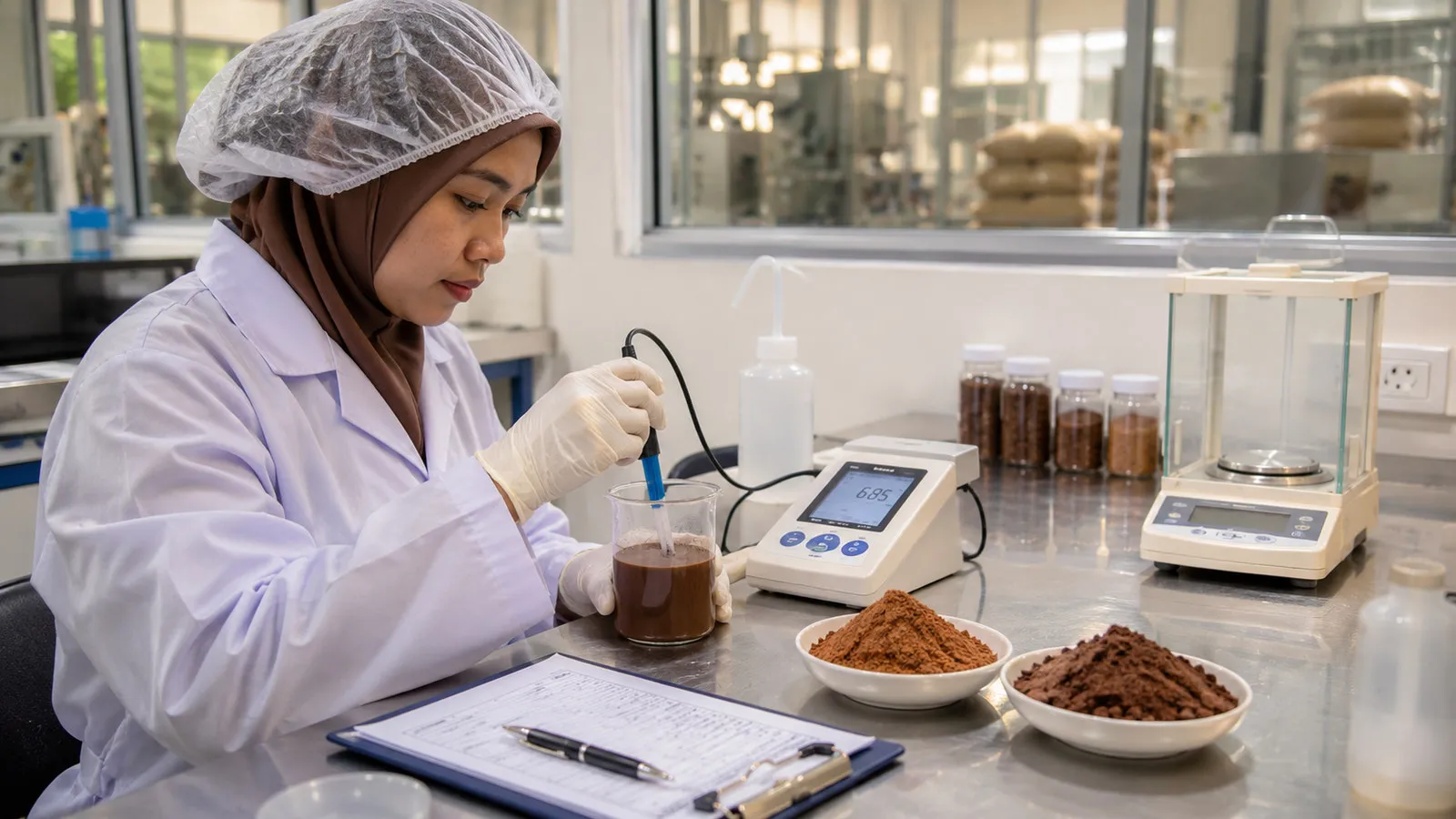
For industrial food manufacturers, selecting a cocoa powder supplier involves much more than evaluating price and color. Product specifications, batch consistency, analytical results, and food safety information all contribute to a dependable purchasing decision.
One of the most important documents in this process is the Certificate of Analysis (COA).
A COA summarizes the test results associated with a particular product batch or sample. Understanding how to interpret this document helps buyers compare materials and identify potential quality concerns before ingredients enter production.
What Is a Cocoa Powder COA?
A Certificate of Analysis is a quality document that records analytical findings for defined parameters. Depending on the manufacturer and buyer requirements, it may include physical, chemical, microbiological, and other testing information.
A useful COA should identify the product, batch or lot number, test parameters, results, units, methods where applicable, and the responsible testing or issuing organization.
Importantly, a COA is not the same as a product specification sheet.
A specification establishes the intended acceptance criteria, while a COA reports results for the sample or batch examined. Buyers should compare the two rather than relying on either document alone.
1. pH: Understanding Acidity and Processing Characteristics
pH is an important indicator when evaluating natural and alkalized cocoa powder.
Natural cocoa powder generally has a more acidic profile, whereas alkalized cocoa powder undergoes processing that modifies its acidity and color.
pH can influence perceived flavor, product appearance, and interactions with other formulation ingredients.
When evaluating pH results, verify that the laboratory uses a consistent measurement procedure, including sample preparation and measurement conditions.
2. Fat Content: Selecting the Right Ingredient Profile
Fat content can influence richness, mouthfeel, and ingredient performance in different food systems.
For example, a formulation developed using a 10–12% fat powder should not automatically be expected to behave identically when replaced by a substantially higher-fat ingredient.
Buyers should confirm whether the reported fat value is expressed on an as-received or dry-matter basis.
3. Moisture and Fineness
Moisture content provides information relevant to storage stability, handling, and protection against moisture exposure.
Fineness or particle-size distribution is another important consideration, particularly for beverage premixes, fillings, and bakery applications.
A specification such as "99% passing 200 mesh" describes a sieving result under a particular test procedure; it does not fully describe every aspect of particle-size distribution.
For meaningful supplier comparisons, request the test method and acceptance criteria.
4. Microbiological and Chemical Safety
Food manufacturers may require microbiological results for parameters such as total plate count, yeast and mold, coliforms, E. coli, and Salmonella.
Heavy metal testing, including cadmium or lead where relevant, may also be required depending on the ingredient and destination market.
Acceptance limits must be based on applicable regulations, product classifications, and customer requirements—not assumptions that one limit applies worldwide.
5. Batch Traceability and Laboratory Methods
Before accepting a COA, verify that the batch identification matches the actual shipment.
For critical parameters, request information about analytical methods, detection limits, testing frequency, and laboratory competence.
A test result is meaningful only when the analytical method is appropriate for the parameter and the tested sample represents the material being evaluated.
A Practical Buyer Checklist
Before approving bulk cocoa ingredients, confirm:
- Product identity and applicable specification
- Batch number and COA identification
- pH, fat, moisture, color, and fineness requirements
- Relevant microbiological and chemical safety results
- Appropriate test methods and units
- Sample approval and batch traceability
- Packaging and destination-market requirements
Conclusion
A cocoa powder COA is more than a quality certificate. It is an important part of technical communication between suppliers and industrial buyers.
Understanding each parameter helps procurement and quality teams make more informed decisions, minimize unnecessary reformulation, and establish clearer acceptance criteria.
Looking for technical information about cocoa ingredients from Indonesia?
PT Brilian Zenco Agroindo (Zencocoa) welcomes inquiries from manufacturers and importers seeking product specifications, sample evaluation, and bulk supply discussions.